10 Best Werewolf Romance Books to Read in 2026
From fated-mate slow burns to enemies-to-lovers pack rivalries — the werewolf romance reads dominating BookTok this year, ranked by what actually keeps readers
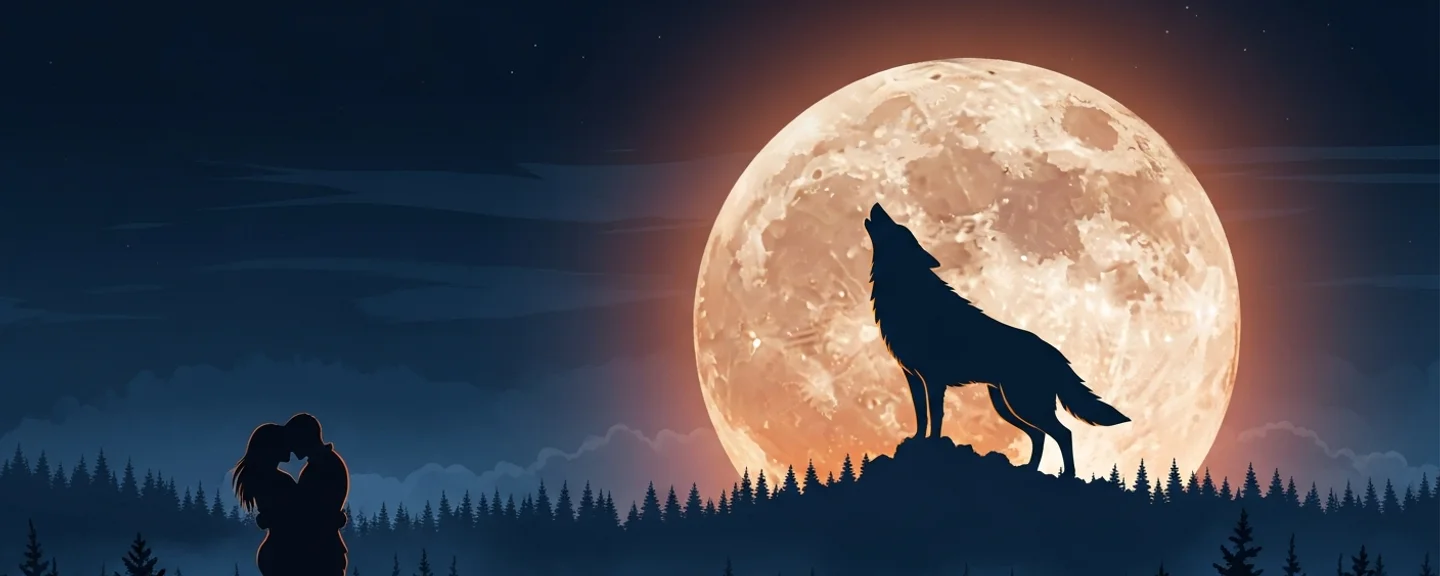
Werewolf romance is having a moment. Not the polite, slow-evolution moment that most genres get. A sudden, BookTok-driven explosion that has shoved fated-mate slow burns and pack-politics intrigue from a niche corner of paranormal into the absolute centre of romance discourse.
If you spent any time on reading-Tok in the last six months, you have already seen the screenshots: the enemies-to-mates standoffs, the rejected-mate revenge arcs, the alpha who calls his fated mate "little wolf" more times than any English-language book has a right to.
The genre's appeal is no longer cult. It is mainstream, and it is generating some of the strongest hooks in modern romance.
This list is not "everyone's favourites." It is ten werewolf romance reads — seven established titles plus three from the contemporary indie wave — that across the past year of reading and re-reading kept doing the thing the genre is supposed to do: pulling you into a full pack at 11 p.m. and refusing to let you go until somebody howls.
What makes a werewolf romance actually work
Before the list, a quick framing. Too many "best of" articles pretend the genre is one thing.
Werewolf romance lives or dies on three pillars: the mate bond (or its refusal), the pack hierarchy (and how breaking it costs the protagonists), and the shift sequences (which need to feel physical, not cinematic).
When all three are dialled in, the romance becomes inevitable in a way that contemporary romance has to engineer carefully.
The books below get this right. Sometimes by leaning fully into the supernatural, sometimes by holding it back until the bond actually matters.
A Hunger Like No OtherKresley Cole (2006)
Lachlain MacRieve spent the better part of a millennium underground, in the kind of imprisonment that does not let you forget you can scent your fated mate half a continent away.
When he finally surfaces in modern Paris and locates Emmaline, she is a half-vampire art student who would rather be drinking espresso than dealing with him.
This is the book that taught the modern paranormal romance market what a fated-mate hook should feel like. Cole's Lykae are not noble; they are starving, possessive, and bad at apologies.
Emma's resistance is what saves the romance from being one-sided pursuit. She keeps Lachlain on the back foot for a long stretch of the book, and the bond never reads as a free pass.
Two decades on, every werewolf alpha in this genre is wearing a coat Cole cut.
Cry WolfPatricia Briggs (2008)
The Alpha & Omega series is where Briggs goes furthest into pack mechanics, and Cry Wolf opens it with one of the genre's most patient courtships.
Anna is an Omega — not the omegaverse-fandom sense of the word, but Briggs's own use of it: a calming presence rare enough to stabilise an entire pack. Charles is the dominant enforcer of a continent-spanning werewolf authority.
He marries her on page one to save her from her current pack, and the rest of the book is them figuring out whether either of them actually wanted that.
What Briggs does that nobody else matches is trust as plot. Anna has been horrifically abused; Charles knows it; their entire arc is Charles refusing to take anything she has not freely offered, even when the wolf inside him is begging.
The romance lands because the restraint is the romance.
What Briggs does that nobody else matches is trust as plot.
Branded by FireNalini Singh (2009)
Mercy Smith is a SnowDancer wolf lieutenant who has spent her entire adult life refusing to be tamed. Riley Kincaid is another SnowDancer lieutenant whose job is to tame everything.
They have known each other for years, hated each other for most of them, and are about to find out the hate was the whole point.
Singh writes the most fully-realised werewolf society in modern PNR. The SnowDancer pack has hierarchy, geography, internal politics, and a depth of secondary characters that most series spend ten books trying to assemble.
Branded by Fire is technically the sixth Psy-Changeling book, but it is the strongest pure-wolf entry, and the friction between Mercy and Riley is closer to combat than to flirting until almost the end.
The shift sequences alone justify the entry. They feel like animals, not costumes.
The modern indie wavefated mates earned, not gifted
The fated-mate trope works when the bond is a complication, not a shortcut. The story should make you wonder if the leads would have chosen each other without the magic, and answer that question slowly.
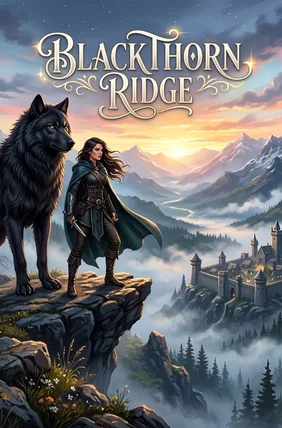
Zephyr watched the Holloway Pack burn her home and take her sister in a single night. Her Alpha is dead and her pack is scattered and the only people with enough power to help are
This one is a textbook example of what the BookTok-driven indie wave is producing right now. The mate-bond hits in chapter two, but the book takes another fifteen chapters before the leads actually trust each other.
That tension between the magic pulling them together and the people refusing it is exactly where the genre earns its readers.
Feral SinsSuzanne Wright (2013)
Taryn Warner is a healer assigned to a hostile pack to act as a fake mate to the alpha. The alpha is Trey Coleman, who is also a not-fake fated mate, which is the only thing in this book that goes the way you expect.
Wright is the snark queen of modern werewolf romance. Every Phoenix Pack book mixes pack politics, possessive heat, and a heroine who refuses to be impressed.
Feral Sins established the template. The romance is great; the secondary characters are why people stay for twelve more books.
For readers who find Briggs and Singh too cerebral, this is the entry point. The plot moves at a sprint, the alpha is unrepentantly possessive, and the heroine never once stops calling him on it.
Pride MatesJennifer Ashley (2010)
A different angle on werewolf romance: shifter communities living openly in a post-reveal world, registered and surveilled by human governments.
Kim is a human attorney; Liam is a Felidae shifter (lion, technically), but the Shifters Unbound community includes wolves, panthers and bears in tight political alliance.
The romance starts as a legal case and turns into an investigation of what supernatural identity costs in a world that knows you exist.
Ashley's series is the answer for readers who find traditional werewolf romance too feudal. The heat is there, the mate-bond mythology is there, but the central question is sociological: what happens when the supernatural is bureaucratically recognised?
Pride Mates answers it across one excellent romance and seeds a series that runs twenty more books deep.
Reject and reclaimthe revenge arc
Cathartic in a way most romance can not reach. A protagonist is rejected by the partner the universe itself promised her. She builds a life without him. Then he sees her on the other side of it.
The hard version of this arc gives the protagonist a real interior life in the gap. Not just a glow-up montage. A person who has reckoned with what the rejection actually meant.
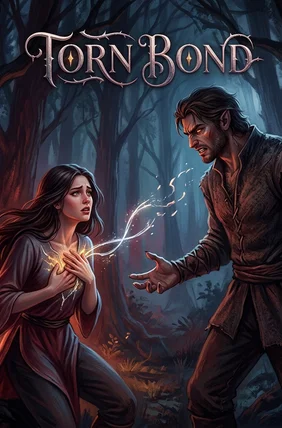
Willow was rejected and banished from her pack on the same morning, which she did not see coming even though she should have. She made it to the Elderwood where Elder Rowan took he
The reunion in this one lands not because the heroine has changed, but because she stopped waiting for him to.
She earns the revenge over half a book of small, deliberate choices, and by the time he is asking her to come back, she has somewhere else to go.
An Alpha's PathCarrie Ann Ryan (2013)
The Redwood Pack series is the closest werewolf romance comes to a soap opera, and that is meant as a compliment.
Ryan writes families. Packs as intergenerational sprawl, with elders, kids, in-laws and pack-cousins colliding by chapter four. An Alpha's Path introduces the Jamenson family and never quite lets you leave.
The romance in book one is solid. The addictive quality is the pack itself, and eighteen books later, the readers are still in.
The contemporary turn
Coffee shops. College. Suburbia. The pack with a Spotify account.
Oakhaven hasn't allowed a male wolf inside its borders in over a century. The pack is all-female, built on Valkyrie blood, protected by magic that has held for generations. Then a
Restraint is the point. When the supernatural finally lands, it amplifies a story that was already alive.
Wolf RainNalini Singh (2018)
Closing the list with a return to Singh, because the Psy-Changeling Trinity arc demonstrates what werewolf romance looks like at series-maturity.
Wolf Rain drops a feral empath into the SnowDancer pack and asks Alexei — a lieutenant haunted by genetic instability — to become her tether to the world.
Twenty-plus books in, Singh's pack mythology has the density of secondary-world fantasy, and Wolf Rain is where the long bench of supporting characters genuinely starts to pay off.
For readers who came up through the early-2000s PNR scene and want to know whether the genre still has somewhere left to go, this is the answer.
The pack is older, the politics are subtler, and the romance is no less inevitable for being earned across two decades of worldbuilding.
---
What to read after
A few honourable mentions for the next deep dive.
The Mercy Thompson series, Patricia Briggs again, with Mercy as the coyote-shifter outsider in a werewolf town. Shiver by Maggie Stiefvater, the YA crossover that brought werewolf romance into reading-Tok before there was reading-Tok. And Quinn Loftis's Grey Wolves series, which is the closest the genre gets to fanfic-energy at full novel length and is enormously beloved for it.
If you read the ten above, you will have seen werewolf romance at its loudest, its most patient, its most political and its most contemporary. The pack does not let you go after.
Where to find these
The seven non-indie titles can be tracked down via any of the usual public libraries, KU-friendly bookshops, or — for quick lookups — the entries below.