Mafia Romance: Why Dark Heroes Took Over BookTok
The rise of morally-grey leads, possessive heroes, and the cultural moment behind the dark-romance explosion of 2025-2026.
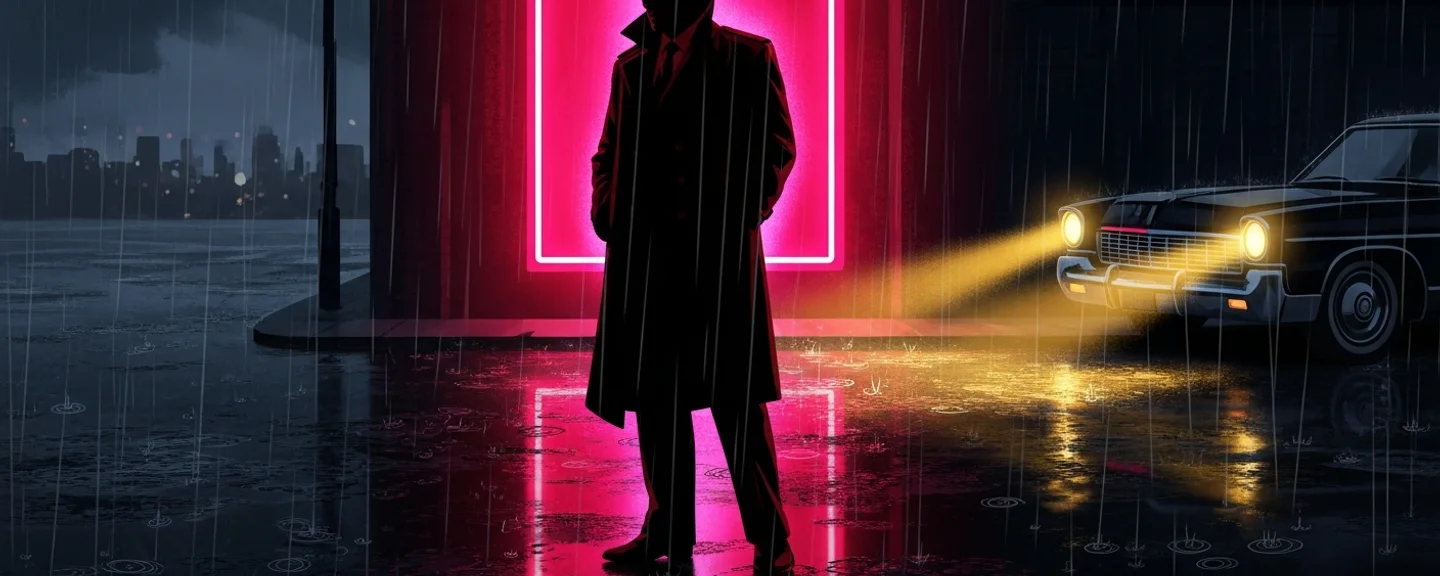
Five years ago, if you walked into a Barnes & Noble and asked which contemporary romance was selling, the answer was a tower of pastel covers. Small-town reunions, single-dad-next-door, the same wholesome fantasy of being chosen by a man who would never embarrass you in public.
Then 2020 happened, and within four years that section had been bulldozed. The books on the central display now had blacked-out covers, knives on the front, content warnings that read like court filings.
The men inside were not single dads. They were killers. And readers, particularly women in their twenties and thirties, could not get enough of them.
Mafia romance, dark romance, morally-grey-billionaire-with-a-body-count romance: the subgenre took over BookTok between 2021 and 2024 with the speed of a market correction.
Ana Huang's Twisted Love sold over a million copies via TikTok screenshots before the major publishers caught up. H.D. Carlton's Haunting Adeline went viral as the book that "broke" readers: the one whose content was so dark people started reading it as a challenge.
Cora Reilly's Born in Blood Mafia Chronicles, an indie series quietly publishing since 2014, suddenly had its early entries on Amazon's romance bestseller list. By mid-2024, dark romance occupied a permanent fixture on every paid romance chart.
This is the analysis of how that happened. Not the history of who published what, but the cultural mechanism that turned a niche corner of erotic indie publishing into the most-read romance subgenre of the decade.
It comes down to three things: a market built in secret, a pandemic that gave readers permission, and a content contract that mainstream romance simply could not write.
How dark romance went mainstream
Dark romance did not arrive in 2021. It arrived in 2011, when Fifty Shades of Grey was a Twilight fan-fiction posted to a free reading site and read by hundreds of thousands of women who pretended, in conversation with their husbands, that they were not reading it.
By 2013, the trilogy had sold over 100 million copies. By 2015, the film adaptation grossed over half a billion dollars globally, putting the genre's economic case beyond dispute.
What Fifty Shades did, badly but profitably, was prove that the female readership had been quietly reading erotica with rough edges for years, and that traditional publishing had been catering to about a tenth of the actual demand. The series was awful by every literary measure. It was also undeniable.
Editors took the lesson seriously: women would pay for sex, power exchange, and morally compromised men, and the market was much bigger than anyone had been willing to admit on the record.
What the next decade revealed was the second-order lesson. Fifty Shades succeeded by accident. Its readers did not love Christian Grey because he was rich; they loved him because he was dangerous in a controlled way.
The contract of the book was that the reader could spend three hundred pages inside a fantasy of being chosen by someone whose attention could destroy you, while remaining absolutely safe. Because it was fiction, and because the genre had promised her that the danger was love, not death.
That contract is the entire premise of dark romance. Fifty Shades was just the first time a publisher had let a million women sign it openly.
The indie market took the contract and ran. Between 2014 and 2020, dark romance, mafia romance, bully romance, captor romance and reverse-harem dark romance built an entire sub-economy on Amazon, mostly via Kindle Unlimited subscriptions and indie authors who could publish faster than New York.
Cora Reilly's mafia chronicles, Penelope Douglas's bully-romance Devil's Night series, Danielle Lori's slow-burn dark series. All of these existed at scale years before BookTok found them.
What BookTok did, between mid-2021 and the end of 2023, was supply the missing component. It gave readers the language to talk about what they were already reading.
Dark romance did not arrive in 2021. It arrived in 2011, and the next decade was a slow argument with traditional publishing about how big the market actually was.
The pandemic permission slip
Reading time spiked during the first eighteen months of the pandemic. Romance, already the top-selling fiction category by unit, expanded its lead. Inside that surge, dark romance grew faster than any other subgenre.
There is a temptation to attribute this to obvious factors. Boredom, anxiety, more time at home. These were real.
But they do not explain why women specifically went for dark romance, and not, say, cozy mystery, which usually surges in periods of cultural stress. Something else was happening.
What was happening was permission.
Reading in public — and BookTok is, structurally, reading in public — depends on consensus that the reading is acceptable. Until 2020, the consensus around dark romance, even from readers who privately devoured it, was that it was guilty pleasure, embarrassing, "not the kind of thing I usually read."
The pandemic broke that consensus the way it broke a great many other things: people had been alone with their preferences too long to keep performing taste.
TikTok creators, predominantly young, predominantly female, predominantly unembarrassed, started posting recommendation videos that did not apologize for the content. The reviews named the books without flinching, treated the readers' appetite as obvious rather than guilty, and turned specific tropes (kidnap, ownership, marriage of convenience) into hashtags.
The videos went viral not because they introduced readers to the books. Those readers existed. They went viral because they made it socially permissible to discuss the books in the open.
By late 2022, you could see the consensus shift. Books that had been read in private were being recommended at brunch. Authors who had been making six figures quietly on Kindle Unlimited were getting traditional publishing deals.
Ana Huang's Kings of Sin, a mafia-adjacent dark romance series, was eventually acquired by mainstream publishing after the Twisted trilogy had already moved hundreds of thousands of copies as self-published. The mainstream had no choice but to follow the money.
The contract the books make with you
Mafia romance, at its peak BookTok form, is doing something specific that wholesome romance cannot.
The thesis of contemporary romance, the small-town variety, the romcom variety, is that finding love means finding a partner who will participate equally in the work of a relationship. The bad days, the budgeting conversations, the meeting of the in-laws.
It is, in the end, an aspirational fantasy of partnership.
Mafia romance is uninterested in partnership. Its fantasy is older and harder: that you will be chosen, absolutely and without negotiation, by someone whose choice is final.
He will not compromise. He will not work on himself. He will simply decide, with the totality of someone who has decided to kill men before, that you are his.
That contract solves a specific problem the contemporary romance reader has with contemporary romance, which is that the latter requires the heroine to do work. The contemporary heroine has to communicate her needs, advocate for herself, negotiate compromises. She has to be reasonable.
The dark romance heroine does not. The contract of her book is that her hero will see her, decide on her, and the negotiation is over.
Whatever boundaries get crossed, they get crossed because he loves her too much, not because he loves her too little. The violence in the books, and there is genuine violence, is always the violence the hero performs on her behalf. It is the violence of being protected.
This is the contract that has driven the subgenre's growth. Whether you find it troubling or freeing depends on your priors. What you cannot do is dispute that millions of women have signed it.
Cora Reilly's mafia chronicles have sustained sales across more than a decade and twenty-plus books. Ana Huang's Twisted and Kings of Sin series are both fixtures of Amazon's romance bestseller list. Danielle Lori's The Sweetest Oblivion has held a position on the same chart for almost three years.
The books are not subtle, and they do not have to be. They are doing the thing the readers came for.
The genre's quiet contradiction
The most interesting thing about mafia romance, the thing the reviews rarely notice, is that almost none of the books are actually about the mafia.
The actual mafia, in genre fiction, is The Godfather, Goodfellas, The Sopranos. It is a set of working-class men trapped in an honor system that will eventually kill them, often dramatised through the slow corruption of a single decent man.
There are women in those stories, but the women are not the point. The point is the men, and the system that grinds them.
Mafia romance has almost nothing to do with this. The hero in a mafia romance is rarely a working-class man. He is usually a billionaire whose family is also the mafia, which gives him the moral architecture for violence without requiring him to drive a truck.
The heroine is rarely entangled in the actual criminal life. She is usually a civilian, often a college student, brought in by force of fate or kidnapping.
The political reality of organised crime, the surveillance, the legal exposure, the slow death of the lifestyle, barely appears.
The "mafia" in mafia romance, in other words, is set-dressing. It serves one structural purpose: it gives the hero permission to be violent toward other men, possessive toward the heroine, and emotionally inaccessible to everyone else, while remaining categorically The One.
The honor code of an imagined criminal family is doing the moral work that, in a contemporary romance, the hero would have to do himself.
This is not a criticism. It is the genre's most elegant move.
The reader does not actually want the political reality of organised crime; she wants the aesthetics of a man who has the capacity for violence, channeled exclusively toward protecting her.
The trope is doing what tropes are supposed to do: distilling a fantasy down to its essential mechanism and removing every component that would make it less efficient.
Where this goes next
The middle of the curve has been picked over. The third or fourth time a heroine gets kidnapped by a mafia heir who turns out to be her fated love, the reader notices the pattern.
Some readers are leaving for fantasy romance, where the same mechanics get to wear a king's crown instead of a Glock. Others want hybrid: mafia paranormal, mafia shifter, mafia vampire.
The supernatural element gives the genre permission to escalate further. A billionaire mafia hero can possess, threaten and obsess. A thousand-year-old vampire one can do all that and mark you for eternity.
The reader who has finished every Ana Huang and every Cora Reilly is buying these hybrids now.
The men with the guns are not going anywhere. The reader has decided.