Why the Anti-Hero Won: Mafia Romance and the Death of the Nice Guy
BookTok readers stopped wanting decent men. We trace how dark romance dethroned every other subgenre in 18 months.
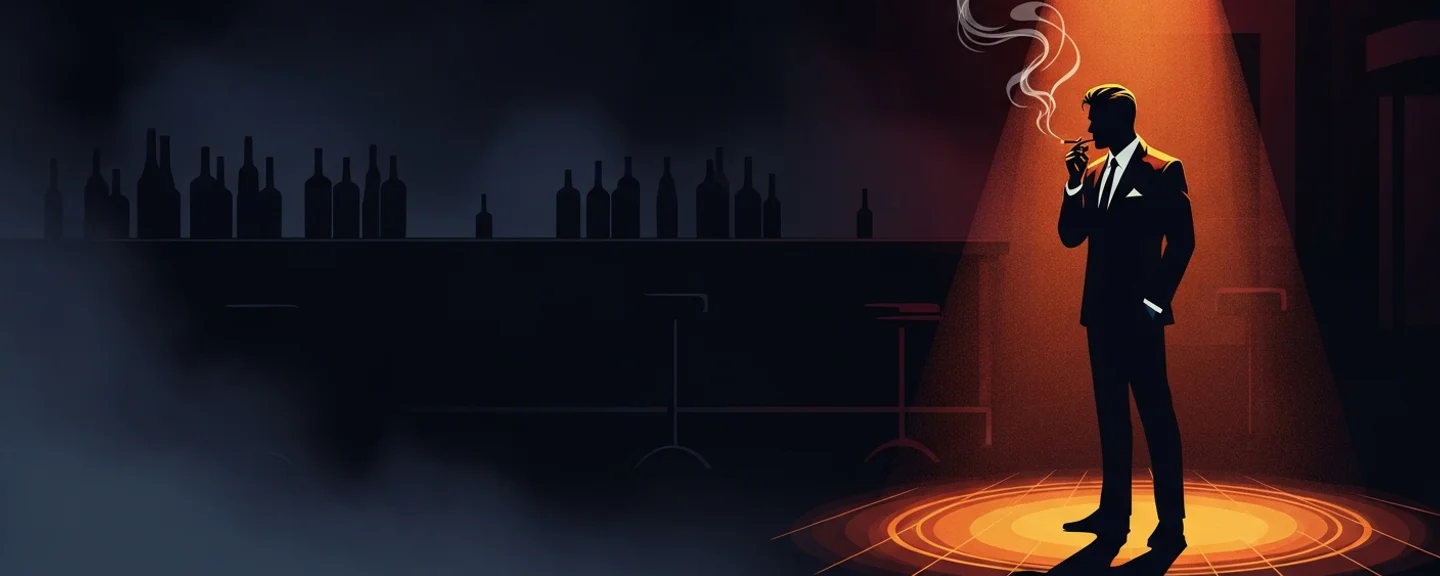
Around 2022, the romance industry's reading data started moving in a direction publishers had not predicted. The "decent man" hero, who had been the genre's reliable bestseller for almost a decade, began losing the chart positions he had held since the late 2010s.
By mid-2024, the books that had dominated the bestseller list in 2018 looked, in some cases, unsellable. The readers had moved.
The shift was not gradual. It happened over roughly eighteen months and it happened across every major romance subcategory simultaneously. Small-town romance, billionaire CEO romance, second-chance romance, sports romance. All four pivoted away from the same archetype at the same time, and toward the same replacement.
The replacement was the anti-hero. He was darker, less apologetic, and considerably less interested in earning the heroine's affection through stable provision. He was a Mafia heir, a corporate killer, a rogue alpha, an Olympian-level grudge-holder. He was not safe and he did not pretend to be.
This is the analysis of why he won.
What the nice guy was selling
The decent hero of 2010-2019 mainstream romance was a specific archetype, refined through hundreds of bestsellers. He was a single father, a recovering jock, a feminist billionaire who quoted bell hooks, a small-town fire chief who fostered shelter dogs.
He had hidden depths, but the depths were always upgraded depth. Past trauma that had taught him sensitivity, never present complexity that might still threaten the heroine.
What he was selling, more than anything, was the absence of red flags. The premise of his appeal was that he had been pre-screened. The book asked the reader to invest in a man whose flaws were marketed as features: emotionally guarded but in a way that would dissolve on contact with the right woman, financially comfortable but in a way that would not corrupt him, occasionally jealous but in a way that would never tip into control.
The decent hero was an aspirational husband. He was the contemporary romance answer to the question: what would it look like if the man you married turned out to be safe?
Generations of romance had answered that question with cathedrals and dukes. The 2010s answered it with stable, kind, vetted men with strong gym schedules.
For most of the decade this worked enormously. Sarah Adams, Tessa Bailey's earlier work, the early Jasmine Guillory novels, every other Christina Lauren. All built reliable readerships on this archetype.
Then it stopped.
Three things broke at once
The collapse of the decent hero did not have a single cause. Three things broke at roughly the same time, and the anti-hero was the only character standing.
The pandemic did damage to "stable men". Between March 2020 and the end of 2021, a documentable number of real-world heterosexual relationships failed under pressure. Romance readers, who skew female and skew currently-or-recently partnered, lived through a period that suggested the "stable provider" archetype was, in many of their actual lives, a fiction.
The men who were supposed to step up did not always step up. The husbands who had been vetted "safe" became, under lockdown, indifferent or absent or worse. The mythology of the decent hero, that there exists a category of man who is reliably good when the stakes rise, became harder to escape into.
This did not turn readers off romance. It turned them off the specific lie the genre had been selling. They wanted heroes whose unreliability was visible from the first page. The anti-hero, who never pretended to be safe, became more honest than the nice guy who had.
Performative niceness had been suspect since 2015. The "nice guy" critique on social media, the observation that a certain kind of man performs decency as currency rather than displays it as character, had been mainstream for years before romance caught up.
By 2022, the romance reader had been steeped in this critique for the entirety of her adult life on the internet. She knew that publicly performative niceness was, in the worst cases, a cover for entitlement and in the best cases boring. She started reading her novels with the same skepticism.
The decent hero in mainstream romance, retrospectively, started to read like the "Nice Guy" of internet discourse. The reader was not necessarily reading him as a predator. She was reading him as a marketing pitch.
Female-gaze theory matured. By 2023, the BookTok community had been openly discussing what women find attractive, as opposed to what cultural messaging told them they were supposed to find attractive, for almost five years. The discourse was sometimes shallow, sometimes embarrassing, frequently insightful.
What it produced was an audience confident enough to admit, in public and in mass, that the decent-but-bland hero never landed for them in the first place.
The anti-hero did. The reasons he did were varied: power dynamics, intensity of focus, the fantasy of being the singular exception to a man's general indifference. The underlying point was the same. He created the chemistry the nice guy was supposed to but never had.

The anti-hero is honest
Here is the paradox at the centre of the genre's pivot.
The anti-hero, on paper, is worse. He is more dangerous. He has body counts, criminal records, possessive language, jealousy that arrives at door-breaking force. He has done things in his past that the decent hero would never have considered. Most of the time, he plans to do more of them.
He is also, in the romance reader's eye, more honest.
The decent hero pretended to be safe. He had passed an implicit screen. The author had decided, on the reader's behalf, that he was a good man. The reader was being asked to trust that screening process, the way an arranged-marriage culture asks a bride to trust her mother's selection.
The anti-hero does not pretend. He is not safe and the book is direct about it. The reader signs a different contract. She is not trusting a screen, she is trusting her own ability to read a man's interior code.
The fantasy is not that this man was vetted for her. It is that she can see what he is, the reader version of the heroine's ability to see, and decide for herself that the bet is worth taking.
This is, structurally, more agency than the nice-guy contract offered. The reader is not asking the author to choose for her. She is choosing.
The nice guy had been pre-screened. The anti-hero has not been screened at all. That turned out to be the point.
The migration into mainstream
What is most striking about the post-2022 shift is not that dark romance dominated. Dark romance had always been a viable subgenre. What is striking is that the anti-hero archetype migrated out of dark romance and into every other category.
In contemporary romance, Tessa Bailey's heroes acquired more edge. The grumpy single dad who used to be reliably reformed by mid-book started becoming a grumpy single dad who has done genuinely questionable things and never quite stops being capable of them.
In billionaire romance, Ana Huang's Kings of Sin series imported mafia-coded heroes into what would have been, ten years earlier, suit-and-office territory.
In YA, Holly Black's The Cruel Prince sold to readers who would have been Twilight's audience a decade earlier. Cardan is meaner, more morally compromised, and considerably less interested in earning Jude's trust than Edward was in earning Bella's.
Even in romcom, the territory that should have been the decent hero's last redoubt, the protagonists acquired teeth. Augustus Everett in Emily Henry's Beach Read is openly contemptuous of the heroine's writing. Adam in Ali Hazelwood's The Love Hypothesis is feared in his department for a reason.
The man who used to be "grumpy with a heart of gold" is now "grumpy with a heart that may or may not pay off; you will find out."
The nice guy, where he still appears, has been demoted from protagonist to discarded ex. He shows up in the prologue, gets dumped in chapter three, and exists to demonstrate that the heroine has correctly learned to prefer something with edge.
What comes next
Two tentative observations about where this goes.
The first is that the anti-hero, in winning, has stopped being a transgression. The novelty of "wait, he is morally compromised?" wears thin when every hero in every subcategory is morally compromised. The reader who was thrilled by the anti-hero in 2022 is, by mid-2026, asking what makes a particular anti-hero distinctive.
Expect a wave of sub-types: the anti-hero with an explicit moral code (mafia, but principled), the anti-hero who does not get redeemed (the genuinely dark protagonist, Penelope Douglas territory), the anti-hero who fails (a more honest tragic romance).
The second is that the decent hero will, in some form, return. Not the 2010s decent hero, the one whose decency was the entire pitch. The next generation will be a hero whose decency is earned against pressure, who is honest about how easily he could have gone the other way, and who is not selling the reader the safety the anti-hero made permanently embarrassing.
He will be a counter-swing rather than a restoration.
What he will not be is the man who was vetted for the reader's safety. That contract is broken. The genre has spent the last four years admitting it was never selling what it claimed to be selling, and the reader has been clear about what she wants instead.