When the Heroine Stalks Back
Why dark romance and psychological thriller are starting to look the same: the trope where the heroine picks up the predator's playbook, and what it does to the

The New York Times reviewed a psychological thriller this week called Nerve Damage by Annakeara Stinson. The book is jittery, the prose is praised, the premise is a familiar one with a twist: a woman whose creepy ex will not leave her alone, who responds by stalking him back.
The book is news. The trope it sits in is not.
The dark romance reader has been watching this trope assemble itself for a decade. The thriller reader has watched it for two. What is interesting is what happens when the trope migrates between them and shows up reviewed in the New York Times, because at that point what was genre territory has become something else.
This is a piece about the reversal — when the heroine picks up the predator's playbook — and about what it does to the line between psychological thriller and dark romance.
The obsessive hero who will not let go
Dark romance built its modern commercial form around the obsessive male protagonist. He sees her. He decides. He removes obstacles. He shows up where he should not be able to be. The heroine processes the encroachment from the inside, and the genre's reader processes it through her.
This is the dynamic. He is the predator, she is the prey, and the romance is the long process of her accepting that her prey-position is also her chosen-position. Anna Zaires's Twist Me. C.J. Roberts's Captive in the Dark. Penelope Douglas's Bully and Birthday Girl. The hero is the threat. The story is the negotiation.
The genre has gotten more honest about this over the last decade. The dubcon label, the redemption-arc transparency, the trigger warnings: all of it acknowledges what the trope is actually doing. The reader signs up with eyes open. The dynamic is sold under its real name.
The thriller's mirror
The psychological thriller takes the same setup and inverts the camera.
The same obsessive male is now seen from the outside, or through the heroine's terror. There is no romance arc. There is escape, survival, sometimes revenge. Caroline Kepnes's You (2014) is the canonical modern example. Joe Goldberg is, structurally, an obsessive dark-romance hero. He sees her, decides, removes obstacles. The book just refuses to romanticise him. The reader knows he is the threat. The genre packaging is thriller; the underlying mechanic is the same dark-romance compulsion.
The line between the two genres at this point is mostly emotional positioning. Dark romance asks the reader to want the obsessive hero. Thriller asks the reader to be afraid of him. Same actions, different frame.
Both genres have huge audiences. Both have stayed in their respective lanes for thirty years.
The reversal
In the last decade, a third pattern has emerged.
The obsessive male shows up. The heroine, instead of accepting him (dark romance) or fleeing him (thriller), starts mirroring his behaviour. She watches him. She shows up where she should not be able to be. She removes his obstacles.
Gillian Flynn's Gone Girl (2012) is the canonical earlier example, and worth dwelling on because it shows the reversal mechanism in its cleanest form.
The book opens with Nick reporting Amy missing. The first half is structured like a wife-disappearance thriller. The reader spends two hundred pages with Nick as he becomes the suspect, while Amy's intermittent diary entries paint her as the threatened wife of a controlling husband. The genre training the reader receives is dark romance reversed: wife as victim, husband as obsessive predator.
The midpoint flip is the mechanism. Amy is alive. The diary was constructed. She planned the disappearance to frame Nick for her death. Every detail the reader took as evidence of the wife-as-victim trope is revealed as evidence of the wife-as-architect trope. Amy is not running from the obsessive husband. She is running the obsession.
The structural achievement is that Flynn does not lose reader sympathy at the flip. The reader stays with Amy. She is the predator, and the reader is still interested in what she does next. This is the move that separates the reversal from a simple villain twist. The heroine remains the protagonist while becoming the predator. Both states are sustained in the same character.
Colleen Hoover's Verity (2018) does the same move in romance-adjacent territory: the wife's voice in the manuscript reveals her as more predatory than her husband. Mona Awad's Bunny (2019) does it in a literary register. Ashley Audrain's The Push (2021) does it through a mother who may or may not be the threat she insists she is.
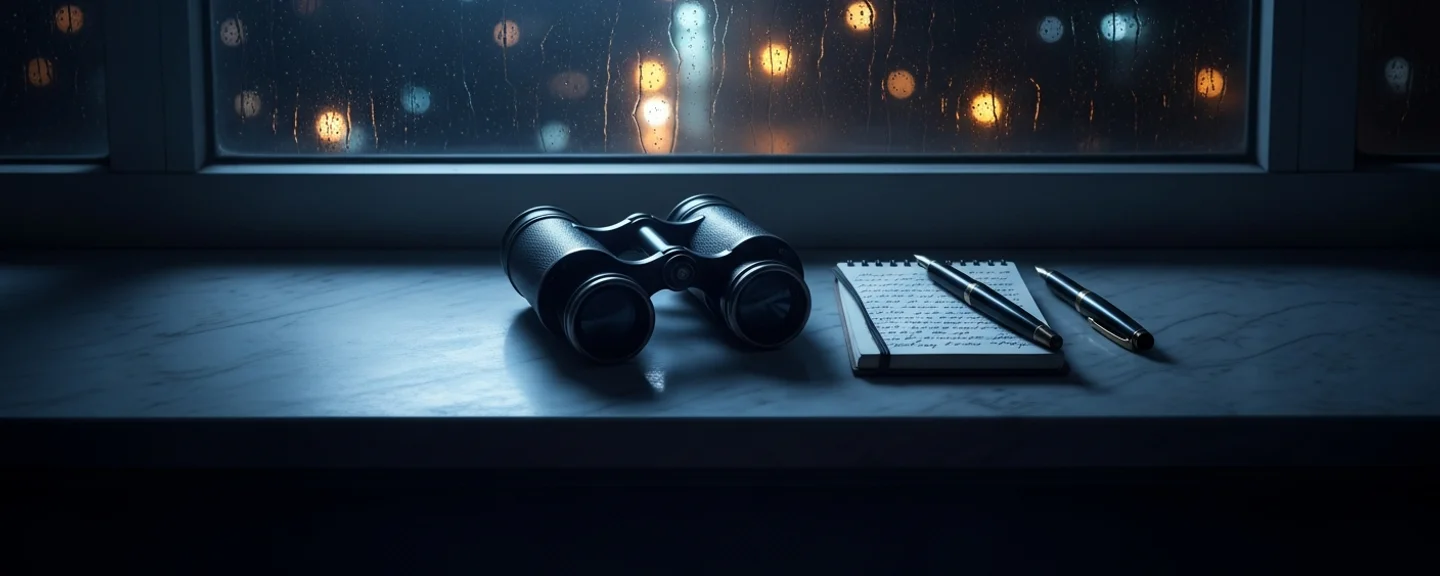
And now, in 2026, Annakeara Stinson's Nerve Damage joins this corpus. The New York Times framing — "stalk him back" — is the trope summarised in three words. The book turns the dark-romance setup of heroine-threatened-by-obsessive-ex into the reversal pattern. She becomes the watcher. The one with the notebook. The one whose camera is pointed at him.
The line between thriller and dark romance is not about what happens. It is about who gets to do it.
Why the reversal works
The reversal succeeds with readers because it answers a question both genres leave open.
In dark romance, the question is: how does the heroine survive emotionally inside the obsessive dynamic? The answer the genre offers is intimacy and acceptance. In thriller, the question is: how does she survive physically? The answer is escape or law enforcement.
In the reversal, the question becomes different. What happens when she has the same tools he has? The answer is darker than either genre delivers on its own. She is not absorbed into him (romance) and not saved from him (thriller). She becomes structurally indistinguishable from him. Two predators. One less surprised.
The reversal mechanism has three operating components, and a piece succeeds or fails on whether it gets all three right.
The trigger. A specific encroachment the heroine refuses to accept passively. In thriller, this is usually physical threat; in dark romance turned reversal, it is often emotional or psychological.
The pivot. A scene where the heroine consciously chooses to operate his playbook. The pivot is the structural midpoint. Everything before it is one genre, everything after is another.
The maintained identification. The hardest of the three. The reader must stay with the heroine through her transition to predator. If sympathy breaks, the book becomes thriller-with-twist (Amy as villain you watch). If sympathy holds, the book is the true reversal (Amy as protagonist whose tools changed).
When Amy slits Desi's throat in the final third of Gone Girl, the reader is being asked to identify with that violence: not as horror to be escaped, not as romance to be accepted, but as the heroine's tool. Most reversals fail because they cannot maintain that simultaneous identification. The ones that succeed do.
This is catharsis the previous generations of these genres did not offer. The reader who has read enough dark romance has watched her heroine soften toward the dangerous man for fifty books. The reader who has read enough thriller has watched her be victimised for two hundred. The reversal lets her, finally, do something other than either of those.
Where the genre line dissolves
What the reversal makes visible is that the genre line was always thinner than it claimed.
Dark romance and psychological thriller use the same character types, the same set pieces, sometimes literally the same plot beats. They are sorted into categories by tone, by which character the camera is attached to, by which emotional register the publisher wants to sell. Move the camera and you move the genre.
Specifically: where does interiority live? Who gets the unspoken thoughts? Whose perspective anchors the prose? In dark romance, the heroine has interiority and the hero is seen through her eyes. In thriller, the heroine still has interiority but the hero is positioned as threat in the reader's processing. In the reversal, the heroine has interiority and her actions are framed by the prose as the predator's actions used to be framed. The narrative grants her the same camera position the obsessive hero used to occupy.
When the heroine becomes the predator-mirror, the camera necessarily moves. She is no longer the object of the dynamic. She is the operator of it. The novel cannot be marketed as either purely thriller or purely dark romance, because the reader's identification has shifted in a way that crosses the line.
This is the moment the New York Times started reviewing these books. The literary establishment notices when genre conventions stop being clean.
The corpus, for the reader who wants to follow it
The recent additions form a recognisable shelf. For the reader who has not encountered it yet, the entry points are clear.
For the thriller register where the obsession runs from man to woman, Caroline Kepnes's You series remains the cleanest execution. Joe is the obsessive-hero archetype written as villain rather than love interest, and the books are clear about that.
For the literary register where the heroine architects, Gillian Flynn's Gone Girl is the foundational text. Mona Awad's Bunny is the experimental version. Ashley Audrain's The Push is the quietest.
For the dark romance crossover, Colleen Hoover's Verity is the most-read example, though romance purists will object to the categorisation.
For the older roots, Patricia Highsmith. The Talented Mr. Ripley, Strangers on a Train, Carol. Highsmith spent her career writing what the genre apparatus would now call this trope, before there was a name or a market for it.
What the reversal means for the next five years
The timing of this consolidation in 2026 is not coincidence. Two cultural shifts converge. The dubcon-era romance reader formed between 2013 and 2020 is now in her late twenties and thirties, demanding more agency in her reading. The post-MeToo thriller reader is exhausted with the woman-as-victim default. The reversal answers both audiences at once. It is what readers in 2026 want because both formative experiences point toward the same craving: the heroine who is not merely surviving.
For most of the post-Twilight decade, dark romance was the dominant commercial form for the obsessive male protagonist. Thriller was its parallel respectable counterpart. Both kept their lanes. The reader who wanted the obsessive male in romantic register read one; the reader who wanted him in horror register read the other.
The reversal collapses the lanes. The reader who wants the heroine doing the obsessing reads across both. The publishing industry, which has spent thirty years sorting these books into categories, will spend the next five figuring out how to sell books that refuse the categories.
The Nerve Damage review this week is one signal. There will be more. The trope is not new. The market that recognises it as literary is. What was once two genres reading the same dynamic is becoming one genre with two registers, and the reader is the one choosing which register she wants tonight.
Where to find these
The books and authors that make up the trope's recognisable corpus: