The Cliffhanger Economy: How Web Novels Hijack Your Brain
Why you cannot put down a 600-chapter web novel even when the writing is mediocre — and what authors are doing differently.
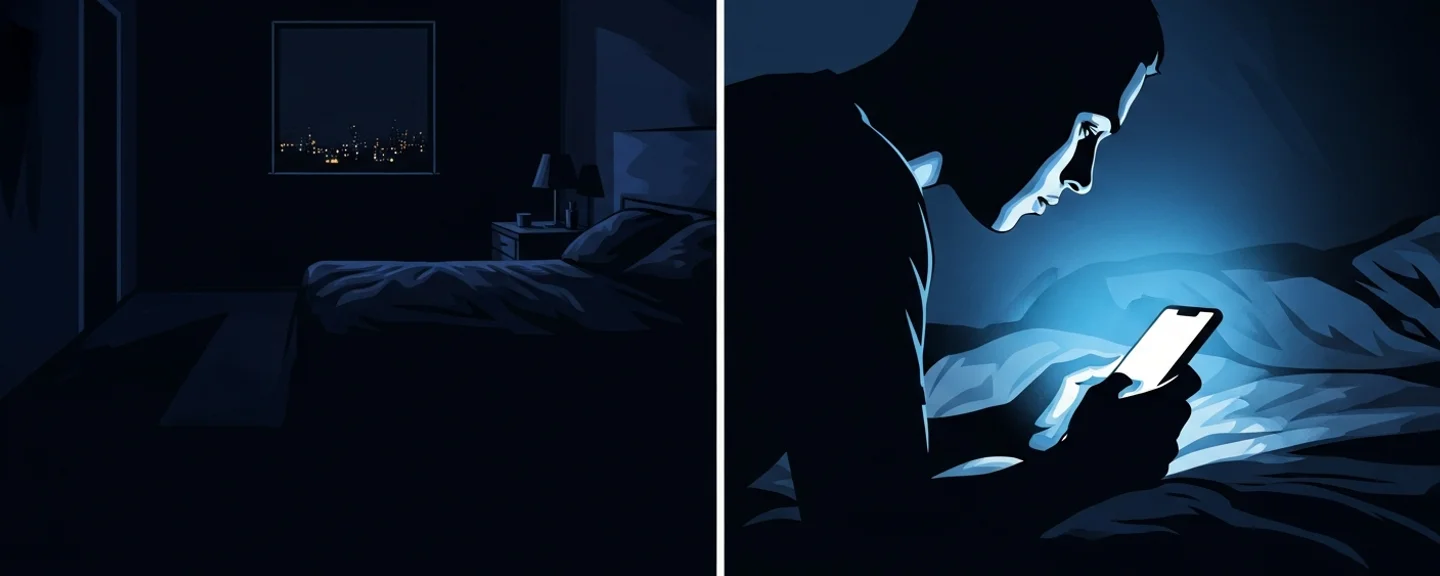
A reader of modern web fiction is, by the time she finishes her first serial, holding a stack of unlocked chapters that has cost her between fifty and a hundred and twenty dollars. She has paid more for one ongoing series than she would have paid for the complete hardcover novels of Stephen King for the same year.
She has not noticed. She paid in twenty-cent increments.
This is the basic transaction of the cliffhanger economy. Platforms like GoodNovel, Dreame, Radish and the long tail of free-to-start-pay-to-finish apps have spent the last five years building a publishing industry on a single insight: human attention, properly cliffhung, will pay for itself in micro-payments that the reader will never integrate.
If you have ever wondered how someone gets to chapter 380 of a serialised werewolf romance and is still buying chapters, this is the answer. The architecture is doing the work. Once you see it, you cannot unsee it.
The economy that should not work
A hardcover edition of Stephen King's most recent novel runs about thirty dollars. The mass-market paperback of The Stand is under fifteen. On any reasonable measure of price-per-word, no serious reader of the last fifty years has paid more than a dollar a kilo for prose.
Web novels charge differently. On GoodNovel, a typical chapter unlock costs the equivalent of twenty to thirty cents, paid via "coins" the reader bought in a $9.99 pack. The chapters average between fifteen hundred and three thousand words.
A four-hundred-chapter serial — and four hundred chapters is well within normal for the platform — will cost roughly the same as three new Stephen King hardcovers, for prose that has not been edited by anyone and frequently was not written by a single author.
The reader is not stupid. She is not even necessarily impulsive. She is paying for a sequence of small, individual decisions that the architecture of the platform has been engineered to make feel small.
Twenty cents to find out what happens next. Another twenty. Another. By the time she has reached chapter 380 she is two months in, eighty dollars deep, and has built a parasocial relationship with both the protagonist and the author. The cost of stopping now feels enormous.
The economic case is not that web novels are charging too much. It is that the unit of decision has been made smaller than the unit of price.
How chapters became dopamine
The cliffhanger is the oldest narrative trick in serialised fiction. Charles Dickens used it. The penny dreadfuls of 1840s London used it.
Victorian readers waited outside London bookshops for the next monthly installment of The Old Curiosity Shop; one famous account, possibly apocryphal but very widely repeated, claims that New Yorkers shouted from the docks to the arriving ship: is Little Nell dead?
What modern web novels did was systematise the cliffhanger. Every chapter ends in mid-action, mid-reveal, mid-confrontation. Not at the end of a scene, where a reader might naturally pause and put the book down. Inside a scene, frequently inside a sentence, on the line whose next word is the one the reader is reaching for.
The platform pairs this with paywall friction at exactly the cognitive moment the cliffhanger has produced. A free reader hits the paywall on the line before the reveal.
The choice presented is not "buy this chapter" — that framing has been studied and discarded — but "unlock now or wait twelve hours". The wait feels like a real cost, the cliffhanger is unresolved, and the chapter unlocks for less than the price of a vending-machine coffee.
The variable-reward loop runs on the same neural circuitry that gambling apps and short-video platforms have spent a decade refining.
What makes the web-novel form distinct from earlier serial fiction is that both sides of the equation are tuned in real time. Authors can see which chapters drive paid unlocks, which kinds of cliffhanger convert, which beats reliably break a reader's attention pattern.
The most successful serial authors on these platforms publish daily, sometimes twice daily, and adjust their writing on the basis of conversion data the same week the chapter goes up.
The unit of decision has been made smaller than the unit of price.
What TikTok actually did
Before any of these platforms started selling web novels, TikTok had spent four years training the audience that would eventually buy them.
The fifteen-second scroll is the same neural mechanism a cliffhanger chapter exploits. Variable reward delivered at high frequency, each piece of content slightly different from the last, the reader's thumb moving on autopilot toward whatever comes next.
The dopamine cycle that TikTok engineered to keep someone scrolling for an hour is structurally identical to the dopamine cycle a web novel platform engineers to keep someone unlocking chapters for an hour.
The chapters are slightly longer, but the unit of decision is the same: another twenty seconds, another twenty cents, another reveal that arrives just before the previous one stops paying off.
Traditional reading does not work this way. A novel asks the reader to hold attention across hundreds of pages for a single delayed reward. The form was developed for an audience whose attention was not yet trained on a fifteen-second cycle.
By 2020, that audience had been quietly disappearing for almost a decade. By 2024, the readership for short-form serial fiction (chapters of two to three minutes, each ending on a hook) had become the dominant reading audience for under-30s in most developed markets.
Web novels did not create this reader. Short-form video did. The publishing industry simply did not know what to do with the result.
Web novels did not create this reader. Short-form video did.
Where the conditioning gets converted into revenue is, unexpectedly, mostly Facebook. The web-novel platforms run their largest paid-acquisition budgets on Meta, not on TikTok.
Pinpoint-targeted ads in the feed of someone whose attention has already been pre-trained by scrolling, dropping the first chapter of a romance with a hook in the third paragraph. The reader who came to Facebook to scroll out of habit looks up an hour later having read forty chapters of a werewolf serial she did not know existed when she opened the app.
BookTok matters too — the screencap-driven pipeline is real — but the actual scale of acquisition for the cliffhanger-economy apps happens on Meta, where the audience skews older, has more disposable income, and is already in the right cognitive mode when the ad arrives.
What none of these platforms advertise publicly is the conversion math. A reader who completes a 400-chapter serial has, on average, paid the equivalent of a two-volume hardcover set. The platforms know this because the data is theirs. The reader does not, because no app displays a running total.

What the writing looks like
Once you understand the architecture, the second question is what the authors are actually doing differently. The answer is more concrete than the literary establishment usually admits.
A web-novel chapter is not a chapter in the traditional sense. It is a two-to-three-thousand-word unit of reading designed to be consumed in one sitting, on a phone, by a reader who probably last read the previous chapter twelve hours ago.
Everything in the craft of writing a successful serial follows from that constraint.
The first paragraph carries everything. A traditional novel can afford to open a chapter with description, easing the reader back into the world. A web-novel chapter cannot.
The reader has been gone for half a day. She has scrolled Facebook, watched five short videos, taken a phone call from her mother, and arrived back at the app with whatever attention she had at chapter end fully eroded.
If the opening paragraph does not grip her — by referencing the cliffhanger she left on, by introducing a new immediate stake, by putting the protagonist back into action mid-motion — the chapter loses her in the first thirty seconds. The platform's analytics will tell the author so by morning.
The result is that successful serial writers open every chapter the way traditional novels open the book. Not "Sarah woke up" but "Sarah opened her eyes and the alpha was still standing over the bed."
The plot moves at one speed; the scene moves at another. A 600-chapter serial cannot have 600 chapters of actual plot. The macro-narrative would collapse under its own weight.
What successful serial writers do instead is run plot at a glacial pace (the central conflict from chapter 50 may not resolve until chapter 380), while pumping density into every scene. Each chapter has multiple turns. Each turn has tension.
The reader is not following a story arc so much as accumulating reward beats, the way a slot machine accumulates them: small wins keeping you in your seat for the eventual big one.
This is also what makes mediocre prose readable at the chapter level. The reader is not evaluating sentence quality. She is evaluating whether each scene delivered the beat she came for. As long as the beats land, the prose can be functional.
The protagonist wins chapter-by-chapter, even when she is losing. Traditional fiction asks the reader to invest in characters who suffer, fail, and only later triumph. Web fiction does not punish the reader's patience the same way.
Even in the bleakest stretches of a 600-chapter werewolf serial, the protagonist will win something every chapter: a small reveal, a verbal comeback, a moment of recognition by the alpha she was supposed to have been rejected by.
The power-fantasy is not pegged to the resolution. It is pegged to the chapter.
This is why readers can describe a serial they have been reading for six months as "amazing" while admitting, under questioning, that nothing important has happened to the protagonist in the last fifty chapters. Nothing important is supposed to happen. The chapter wins are the point.
The chapter wins are the point.
Reader-tells get coded into the prose. Web-novel readers comment on every chapter, in volume, in real time. They identify the phrases they love and the beats they hate.
Successful serial writers read the comments and feed the language back. A LitRPG author whose readers respond to a particular phrasing of level-up moments will use it nine more times across the next ten chapters. A romance author whose readers like "his eyes darkened" will write his eyes darkening into every emotional beat from then on.
This is sometimes mistaken for laziness. It is closer to a feedback loop refined past the point most traditional editors would allow.
The daily-update schedule is a contract. A traditional novelist publishes once every two or three years. The relationship with the reader is mediated by the book.
A web-novel author publishes every day, sometimes twice a day, in a Discord and a comments thread, addressing readers by name. If she misses an update, she loses chapters of reader attention. If she misses three days, she loses readers.
The contract is not the manuscript but the schedule, and the schedule shapes everything the author writes. Beats are placed where they can be written that day. Subplots are introduced where they can be sustained for the next three weeks. Endings are deferred because the author cannot afford to lose her schedule of paid chapters between series.
All of this is invisible to a reader of traditional fiction. It is the entire job of a web-novel author.
What the writers actually make
A web-novel author on a paid platform typically receives somewhere between 30% and 50% of the gross paid by readers on her chapters, depending on the deal structure.
The most successful authors — and there are dozens of these earning six figures, a handful earning seven — are running daily-update schedules of two to four thousand words a day, every day, for two to three years per series.
This is not a sustainable rate of human creative production. It is sustainable only in some combination of three ways: with AI assistance (increasingly normalised between 2024 and 2026), with ghost writers and co-authors (common in Chinese-platform models), or by burning the author out within a single series and recruiting the next one.
The platform's incentive structure rewards completion at scale. A finished 400-chapter serial earns more than four 100-chapter ones, even though the latter would be more readable.
Series get longer for reasons the reader can sometimes feel — pacing wobbles, side characters get full arcs they did not need, the heroine spends two hundred pages on a sub-plot that does not advance the main romance — because the platform has measured that readers stay engaged through these and keep buying.
The literary establishment, the bit that pays attention to web novels at all, treats this as a debasement of fiction. The actual reading public, which is enormous, does not.
They are reading a different kind of fiction, optimised for different conditions, paid for in a different currency than the publishing industry recognises.
What is actually being read
Two streams. The first is Asian-origin progression and cultivation fantasy (Chinese xianxia, Korean dungeon-leveling, Japanese isekai) running to thousands of chapters per series.
Lord of the Mysteries, 1,421 chapters from the Chinese writer Cuttlefish That Loves Diving, has been read in the millions. Solo Leveling, Korean, became a Netflix anime and a global IP franchise after running as a webnovel and a Webtoon adaptation. Omniscient Reader's Viewpoint runs over 500 chapters and has its own multi-million-dollar transmedia economy.
The second stream is Western romance: werewolf, alpha CEO, mafia, omegaverse, on apps like GoodNovel, Dreame and NovelCat.
The titles are interchangeable in a way the authors will be the first to admit ("The Alpha's Stolen Mate", "Rejected by My Mate, Claimed by the Lycan King"), but the readership is enormous and the conversion rates are higher than any other digital reading market.
Royal Road and Wattpad sit between the two. Community-driven, free to read with optional monetisation, source of more crossover hits than the paid platforms despite earning their authors less.
He Who Fights with Monsters, Mother of Learning, The Wandering Inn, Dungeon Crawler Carl all began as free serials on these platforms before going to traditional publishing.
The Wandering Inn, by the pseudonymous author pirateaba, runs to over thirteen million words across more than a thousand chapters and is, plausibly, the longest piece of fiction ever written in English by a single author.
Why it is not going anywhere
The cliffhanger economy has now run for long enough to demonstrate two things.
The first is that it produces real readers. The audience for web novels in 2026, including under-25s who came in via TikTok, exceeds the audience for most traditional fiction by an order of magnitude.
They are reading more words per year, more frequently, on more devices, than the audience the publishing industry has been measuring. They simply do it inside platforms the industry does not track.
The second is that the model is not going back. Once readers have been trained to pay in twenty-cent increments for chapters that arrive daily, no traditional publishing schedule (book once a year, full price up front) competes for the same reader behaviour.
The web-novel reader is not waiting for the next Stephen King. She is unlocking chapter 380 tonight.
She is unlocking chapter 380 tonight.
Whether this is good or bad for fiction depends on what you think fiction is for. If you think it is for slow, considered reading of carefully edited prose, the cliffhanger economy is a debasement and a habit-formation scheme.
If you think it is for the reader getting what she actually wants in the rhythm she actually wants it, the cliffhanger economy is the largest reading expansion in fifty years.
What is not debatable is the size. The reader has voted, in tokens, and the votes are in.
Where to find these
The seven web-novel titles named in this piece can all be sampled or bought via the platforms that hosted them, plus their bound editions where available.